
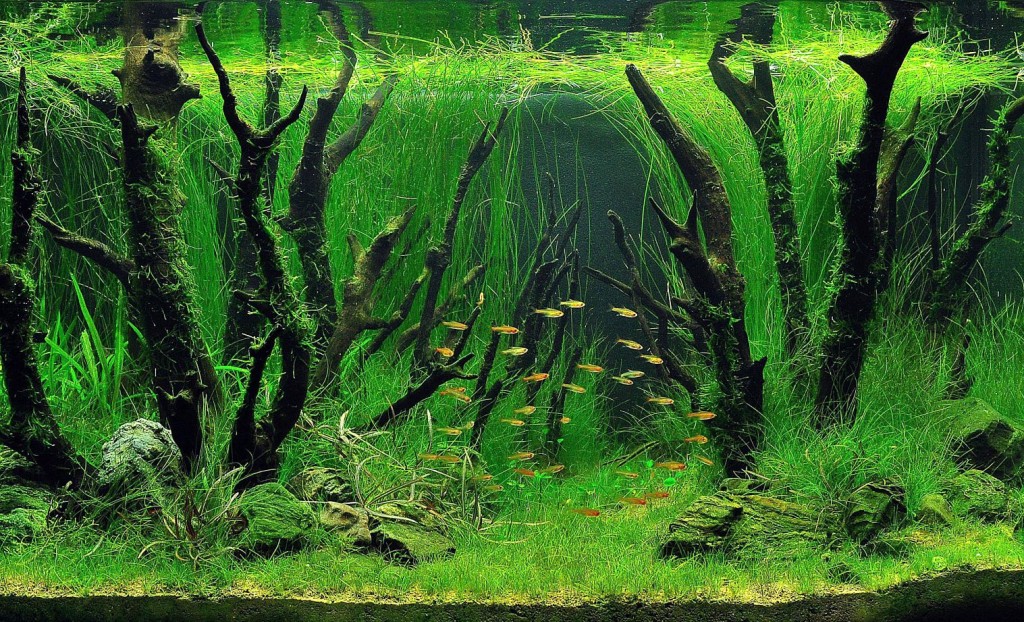
Choose aquarium plants to suit your lighting, tank height, substrate and the time you can devote to maintenance. For beginners, matching a few suitable plants to the equipment you have is more useful than immediately planting many species with different requirements.
Plants help shape the aquarium's appearance and provide cover for its inhabitants. However, a planted aquarium still needs maintenance: plants do not replace a filter, water testing or suitable conditions for the animals.
Which aquarium plants are suitable for beginners?
Look for plants whose lighting and maintenance needs suit your aquarium. The word ‘undemanding’ does not mean that a plant will grow in any conditions. Before buying, check the exact species or cultivar name, its size and how it should be planted.
- Plants attached to decor are suitable when you want plants to grow on rocks or wood.
- Plants rooted in the substrate should be chosen according to the space available for their roots, the substrate and their eventual size.
- Floating plants need room at the surface without compromising the needs of other plants and aquarium inhabitants.
Hornwort in an aquarium
Hornwort (Ceratophyllum demersum) has no true roots. It can be kept floating or arranged in the aquarium so that it stays in the desired position. Tropica lists low light and CO2 requirements for this plant. Even so, monitor its growth in your own aquarium: a species name alone does not guarantee that all the conditions will suit it.
Inspect the stems regularly, remove damaged parts and thin out overly dense growth. Hornwort should not be seen as a solution to every water quality problem.
Anubias: plants for rocks and wood
Anubias barteri var. nana is a slow-growing plant that can be attached to a rock or piece of wood. Do not bury its rhizome in the substrate: Tropica warns of a risk of rot. This plant can also grow in a shadier part of the aquarium.
Echinodorus and Vallisneria
Do not choose plants from these genera by their photos alone. Different species and cultivars have different sizes and needs. Check how much space the mature plant will occupy, whether it will shade other plants and whether access for aquarium maintenance will remain.
Leave room for growth when planning the layout. If you do not know a plant's exact name, keep its label or a photo and seek advice before planting it.
Pistia, Riccia and other floating plants
When choosing plants to keep at the surface, plan how much surface area they will occupy and how you will maintain them. Check the conditions required by the particular species, its suitability for your aquarium and any applicable requirements for purchasing and growing it. Mentioning these species is not a recommendation to buy them without checking these factors.
Lighting, fertilisers and CO₂
First, note which light you use, how long it stays on and which plants grow in the aquarium. Use fertilisers according to the instructions for the specific product. If the plants look unhealthy, do not increase the doses of several products at once based only on a photo of the leaves.
CO2 equipment and whether it is needed depend on the aquarium setup you choose. There is no single universal fertilising or lighting schedule for all plants. If in doubt, review the equipment, maintenance history and water test results with a specialist.
Maintenance and common mistakes
- Not knowing the plant's exact name and eventual size.
- Planting a species in a way that does not suit its growth habit.
- Leaving rotting parts and excessively dense growth in place.
- Changing lighting or fertilisers without assessing the aquarium's overall condition.
To help plan maintenance tasks, see our aquarium maintenance guide. If growth is coating the plants, read about what to check when algae appear.
Need help planting your aquarium?
If your aquarium is already running, explore our aquarium renovation and planting service in Vilnius. We can discuss which existing plants and decor are worth keeping.
In Vilnius, we help choose plants, substrate and equipment and set up aquariums. View real photos of our work or send a photo of your aquarium for advice.
Sources
- Tropica: Ceratophyllum demersum – root characteristics and lighting requirements.
- Tropica: Anubias barteri var. nana – attachment and rhizome care.