
Algae in the aquarium are a reason to review lighting, feeding, plant condition and maintenance, not to add a treatment immediately. First assess where the growth appears, how quickly it spreads and what has changed in the aquarium recently.
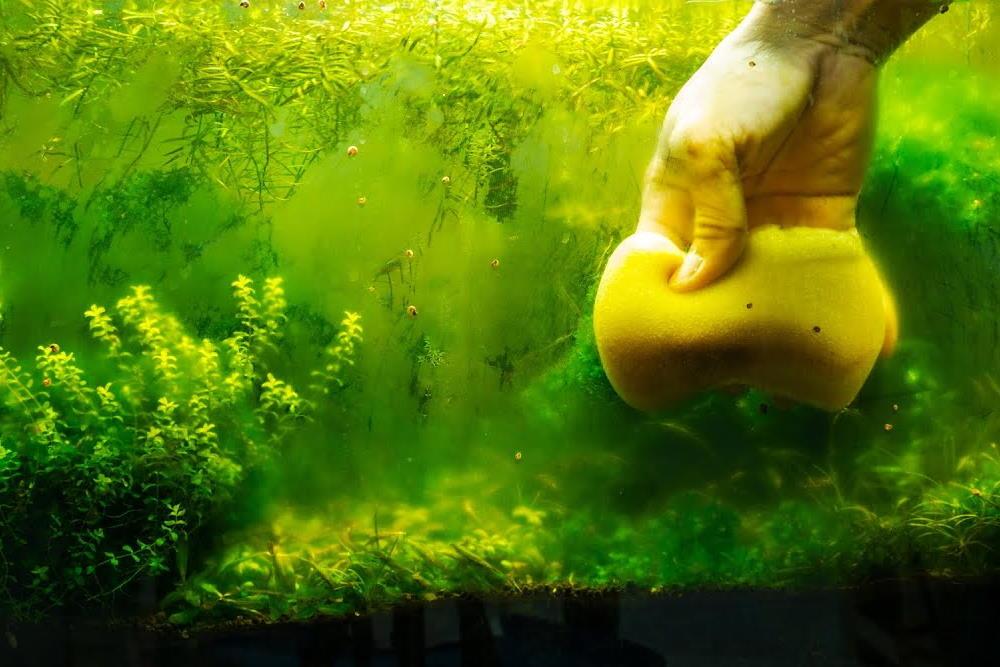
How should you describe algae and surface growth?
Take an overall aquarium photo and a close-up of the affected area. Note whether the growth is green, brownish, thread-like, tufted or slimy. Colour alone does not always reliably identify what is growing or why.
Green spots on glass, threads among plants and dark tufts on leaves should not be treated as a single problem with one universal solution. Cyanobacteria, often called blue-green algae, are bacteria; if you are unsure what the growth is, consult a specialist.
What should you check first?
- Lighting. Note the light model, how long it stays on and whether the aquarium receives direct sunlight.
- Feeding. Assess whether uneaten food remains after feeding and whether the number of inhabitants has changed.
- Equipment. Check whether the filter is running normally and when it was last maintained.
- Water tests. Keep the results and their dates. Clear water is not sufficient evidence of good water quality.
- Changes to maintenance. Recall water changes and any new fertilisers, decor or plants.
Do not establish the cause of surface growth from a single measurement. For example, dark tufts on a plant do not by themselves prove that excess phosphate is the sole cause.
Maintenance before choosing treatments
Clean accessible surfaces with tools suitable for the aquarium, collect the removed growth and attend to rotting plant parts. Match the work, water changes and filter maintenance to the condition of the particular aquarium. Do not overhaul the entire system at once without a clear plan.
Record changes to lighting, fertilisers or equipment and monitor the results. A universal promise that the same lighting schedule or water-change amount will help everyone would be misleading.
For more about maintenance tasks, see our aquarium maintenance guide. For choosing and caring for plants, see our aquarium plants overview.
Algae treatments: important restrictions
API Algaefix and shrimp
The manufacturer of API Algaefix states that this product must not be used with freshwater crustaceans, including shrimp, crabs and lobsters. The earlier general claim that the product does not harm aquarium inhabitants is therefore inappropriate. Always read the label and restrictions on the specific package.
What Seachem Flourish Excel is for
Seachem Flourish Excel is presented by its manufacturer as a carbon source for plants, not as an algaecide. The manufacturer also warns that direct application to plants or overdosing may damage them. The product should not be presented as a universal algae-removal method that is harmless to every plant.
Hydrogen peroxide
This general guide does not recommend using or dosing hydrogen peroxide. The phrase ‘use small doses’ specifies neither a concentration nor suitability for a particular aquarium. If you are considering a chemical product, first check its intended use, instructions and restrictions with a competent specialist.
When should you seek help?
If water clarity or filter operation has also changed, ask about aquarium water testing during a maintenance visit.
If growth quickly returns, equipment care is unclear or the aquarium has been neglected, it is worth assessing the entire maintenance process. In Vilnius, we provide aquarium cleaning and condition assessments. Send photosalong with the tank volume, equipment, inhabitants and products used.
If you also notice changes in the fish's breathing, behaviour or other signs of health, do not attribute them to algae alone. For diagnosis and treatment, consult a veterinarian with knowledge of fish health.
Sources and update
Text reviewed on 16 September 2026. Product purposes and restrictions were clarified; general claims of harmlessness and vague dosing advice were removed.