Fishless cycling gets the biological filter ready before you add fish. Microorganisms need to become established in the filter media so they can process compounds that form from fish waste and leftover food. Use the trend in your water test results and the needs of the species you plan to keep to judge when the aquarium is ready.
What is the nitrogen cycle in an aquarium?
Waste in the water produces ammonia and ammonium. In an established biological filter, microorganisms convert them to nitrite and then to nitrate. Ammonia and nitrite can harm fish. In a new aquarium, the microbial community in the filter is still developing. A running filter and clear water alone don’t tell you whether the system can handle the waste from the fish.
How do you start fishless cycling?
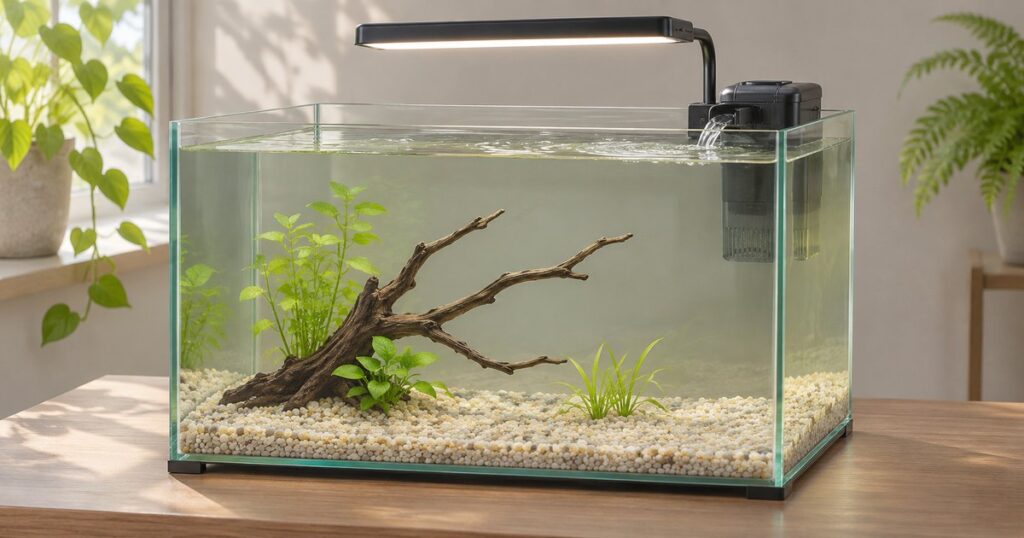
- Set up the equipment and aquarium. Install a suitable filter and a heater if needed. Prepare the water according to its source and the species you plan to keep. Check that the filter is running and that there are no leaks.
- Choose a cycling method. The biological filter needs a source of ammonia to start processing waste. If you choose an aquarium cycling method or product, follow its specific instructions and ask a specialist if anything is unclear. You don’t need fish to start the cycle.
- Keep a record of your tests. Note the date and the readings for ammonia or ammonium, nitrite, and nitrate, following the instructions for your test kits. Record any changes too, such as changing the water, turning off the filter, or adjusting the cycling process. That makes it easier to interpret changes in the results.
When can you add the first fish?
During cycling, look for ammonia and nitrite readings to fall below what your tests can detect after you add an ammonia source according to your chosen method. Zero readings immediately after filling the aquarium don’t mean the biological filter is established. Get advice on your specific method and check that the temperature and other water parameters suit the species you plan to keep.
Once the aquarium is ready, increase the number of fish gradually and monitor water quality after each change. For help choosing species, see our guide to choosing your first aquarium fish.
What if the water turns cloudy during cycling?
Note when the cloudiness started, check that the filter is working, and test the water. Read what to check when aquarium water turns cloudy. Hold off on adding fish until you understand how the readings are changing.
If you need equipment and a cycling plan for a new aquarium, see our aquarium setup service in Vilnius. If you have test results, you can also arrange a separate water testing visit.